

Best Probiotic for Dogs 2026: What Really Makes a Difference?
A healthy gut affects much more than digestion. It helps your dog absorb nutrients, maintain a balanced immune system, produce healthy stools, and stay comfortable after meals. That's one reason probiotics have become one of the fastest-growing categories in pet supplements. The challenge is figuring out which products are actually worth buying. Shelves are packed with soft chews, powders, capsules, and even probiotic treats. Every label promises better digestion, but the ingredients behind those claims can be very different.
If you're searching for the best probiotic for dogs in 2026, it's worth looking beyond the marketing and focusing on what the science says.

Why Gut Health Matters More Than You Might Think
Your dog's digestive tract is home to trillions of microorganisms known as the gut microbiome. When these beneficial bacteria stay in balance, they help digest food, produce certain vitamins, and prevent harmful bacteria from taking over.

Signs You May Need Probiotics
Problems can begin when that balance changes. Antibiotics, sudden diet changes, stress, travel, food sensitivities, or illness may reduce beneficial bacteria, making digestive upset more likely.
According to the World Small Animal Veterinary Association (WSAVA), maintaining a healthy intestinal microbiome is an important part of supporting overall health in companion animals. The organization also notes that nutrition plays a major role in keeping the gut functioning properly.
The Merck Veterinary Manual explains that probiotics may help restore normal intestinal bacteria in certain situations, particularly after antibiotic treatment or during some gastrointestinal disorders. While they are not medications, they can be useful nutritional supplements when chosen appropriately.
Signs Your Dog Could Benefit From a Probiotic
Digestive issues aren't always dramatic. Sometimes the signs are subtle enough that owners simply assume their dog has a "sensitive stomach."
Maybe your dog occasionally has loose stools after switching foods. Maybe they pass more gas than usual or seem uncomfortable after eating. Some dogs have inconsistent bowel movements, while others experience temporary digestive upset during boarding, travel, or stressful situations.

Probiotics may also be helpful after a course of antibiotics since those medications can reduce beneficial bacteria along with harmful ones.
According to VCA Animal Hospitals, certain probiotic strains have shown benefits for supporting intestinal health in dogs, although results depend on the strain being used and the condition being treated.

What can Kaiivo probiotic soft chews do?
Of course, if your dog has persistent diarrhea, vomiting, weight loss, blood in the stool, or ongoing digestive problems, it's important to consult your veterinarian rather than relying on supplements alone.
Not All Dog Probiotics Are Built the Same
Many pet owners immediately compare the number of CFUs, or colony-forming units, listed on the label. While CFU count is important, it doesn't tell the whole story. A quality probiotic should contain bacterial strains that have been studied in dogs, along with ingredients that help those bacteria survive long enough to reach the intestines. That's where prebiotics come in.
Prebiotics aren't bacteria themselves. Instead, they're specialized fibers that feed beneficial microbes already living in your dog's digestive tract. Ingredients like inulin, fructooligosaccharides (FOS), and galactooligosaccharides (GOS) are commonly used because they encourage healthy bacterial growth after the probiotics arrive.
Many nutrition experts now recommend looking for formulas that combine probiotics and prebiotics, often called a synbiotic approach, because the ingredients work together rather than separately. The National Institutes of Health (NIH) notes that prebiotics can help promote the growth of beneficial intestinal bacteria and support a healthier gut environment.
Why Multi-Ingredient Formulas Are Becoming Popular
One noticeable trend in 2026 is that probiotics are no longer being sold as standalone products. Instead, manufacturers are combining beneficial bacteria with digestive-support ingredients like pumpkin, papaya, omega-3 fatty acids, and gentle botanical extracts. The idea is simple: digestion isn't controlled by probiotics alone, so supporting multiple aspects of gut health may provide a more complete daily supplement.
Pumpkin, for example, provides natural fiber that can help support normal stool consistency. Papaya contains naturally occurring digestive enzymes, while omega-3 fatty acids are widely recognized for supporting skin, immune, and overall wellness.
Some brands have also started adding herbs traditionally used to support digestive comfort. Ingredients such as chamomile, calendula, and yucca extract are increasingly appearing in modern pet supplements because they're generally well tolerated and fit naturally into daily wellness routines.
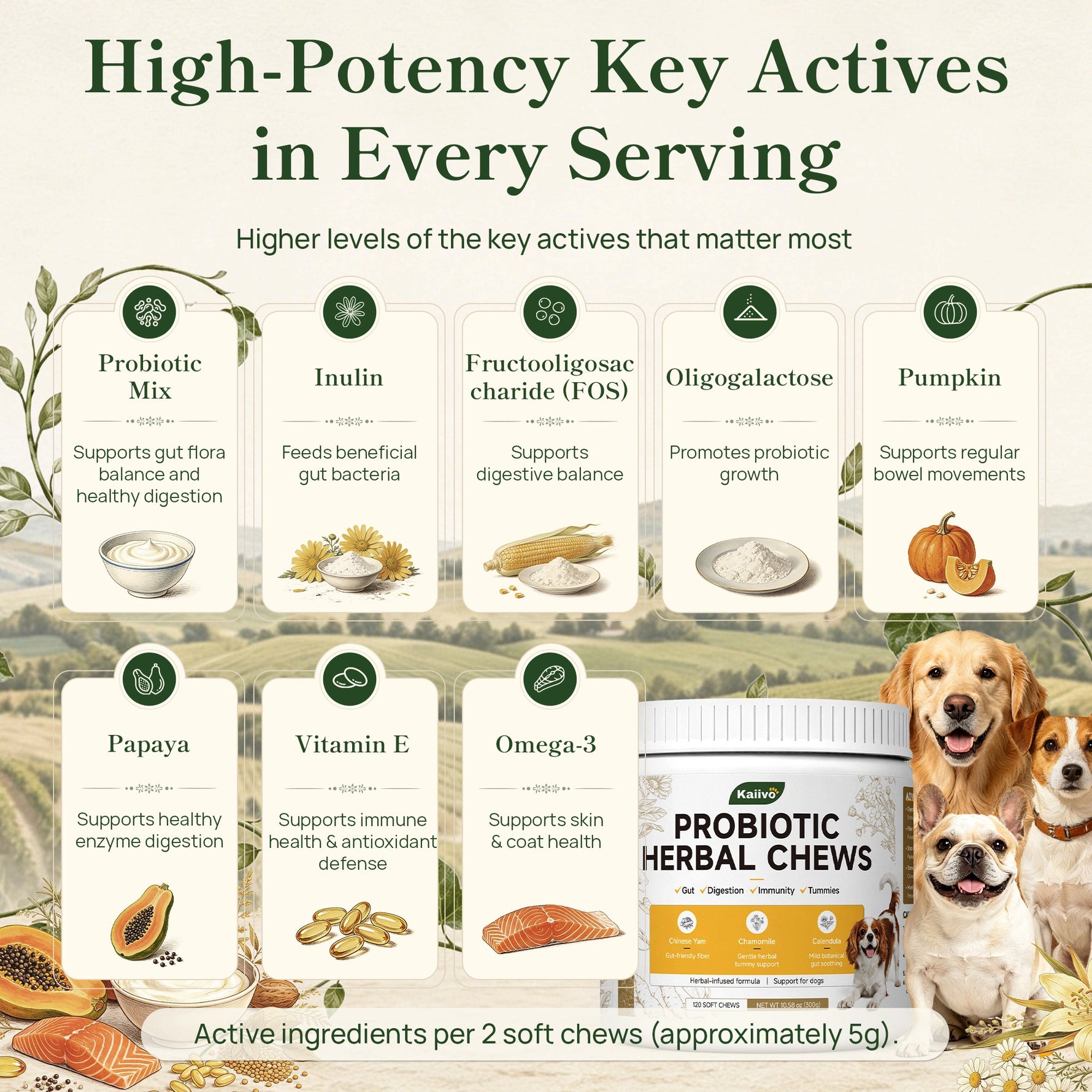
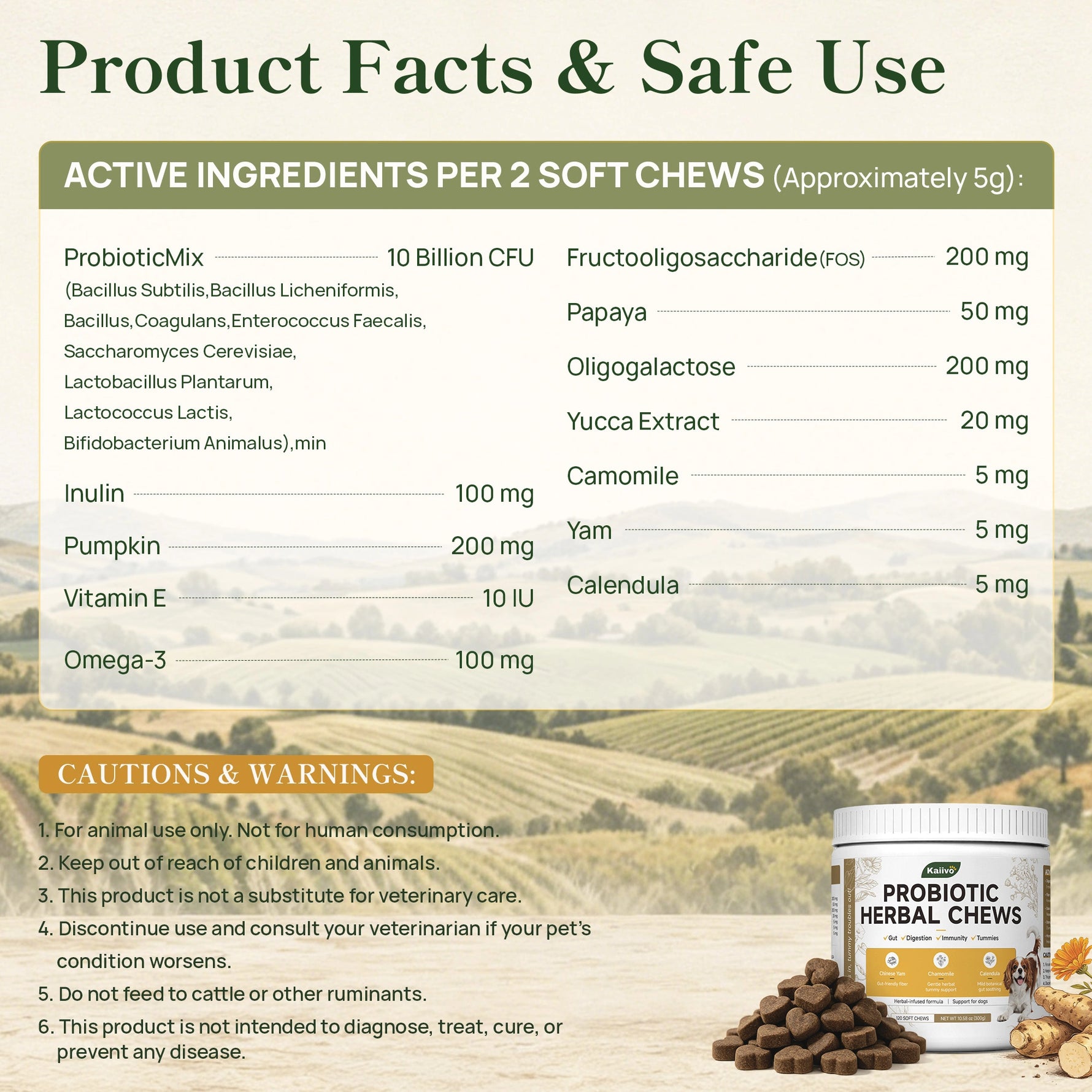
One example is Kaiivo probiotic herbal soft chews. Rather than relying only on probiotics, the formula combines 10 billion CFU from multiple probiotic strains with inulin, FOS, GOS, pumpkin, papaya, omega-3, chamomile, calendula, and yucca extract. The soft chews are also grain-free, contain no artificial preservatives or flavors, and are produced in a GMP-certified, FDA-registered facility. For pet owners looking for a supplement that supports digestion from several angles instead of focusing on bacteria alone, this type of formulation is becoming increasingly attractive.
Kaiivo probiotic herbal chews active ingredients
Best Dog Probiotic Brands Worth Considering in 2026
Walk into any pet store or browse online, and you'll find dozens of probiotic supplements claiming to be the best. While no single product is perfect for every dog, several brands consistently stand out for different reasons.
Purina Pro Plan FortiFlora remains one of the most recommended veterinary probiotics. Its single-strain formula has been studied in dogs and is commonly suggested during short-term digestive upset or after antibiotic use. Many veterinary clinics keep it on hand because of its research history rather than an unusually high CFU count.

Nutramax Proviable takes a different approach by combining multiple probiotic strains with prebiotics. It's often chosen for dogs recovering from digestive disturbances and is available in both capsule and paste forms.

Zesty Paws probiotic bites have become popular among pet owners because they're easy to feed and include digestive enzymes alongside probiotics. They're designed more for daily digestive maintenance than for managing specific gastrointestinal conditions.

Native Pet Probiotic Powder is appreciated for its relatively simple ingredient list and powdered format, making it easy to mix into food for picky eaters.

Honest Paws Probiotics focus on everyday digestive wellness with added prebiotic fiber and ingredients selected for dogs with sensitive stomachs.

A newer option gaining attention is Kaiivo probiotic herbal soft chews. Instead of relying only on probiotics, Kaiivo combines 10 billion CFU from eight probiotic strains with prebiotics including inulin, FOS, and GOS, plus pumpkin, papaya, omega-3, chamomile, calendula, and yucca extract. This synbiotic formula supports beneficial bacteria while also providing fiber and gentle botanical ingredients traditionally used to support digestive comfort. For owners looking for a daily wellness supplement rather than a probiotic alone, this broader nutritional approach makes Kaiivo an interesting choice.
How to Choose the Right Probiotic for Your Dog
Rather than choosing the product with the biggest number on the label, think about your dog's individual needs.
If your dog occasionally experiences digestive upset after antibiotics, a veterinarian may recommend a product with clinically studied bacterial strains. If your dog simply has a sensitive stomach or inconsistent stools, a daily synbiotic formula that combines probiotics with prebiotics may provide broader digestive support.
It's also worth checking the ingredient list beyond the probiotic blend. Pumpkin adds natural fiber, while prebiotics such as FOS and inulin help nourish beneficial bacteria already living in the gut. Digestive-support ingredients like papaya and gentle herbs may also complement a balanced daily routine.
Manufacturing quality matters too. Look for supplements produced in GMP-certified facilities, clear labeling of CFU counts, transparent ingredient lists, and expiration dates that guarantee live bacteria through the end of shelf life—not just at the time of manufacturing. Research also suggests that probiotic effects are strain-specific, meaning choosing well-formulated products is more important than chasing the highest CFU number.
Frequently Asked Questions
How long does it take for dog probiotics to work?
Some dogs show improvements in stool quality within a few days, while others may need several weeks of consistent use. The response depends on your dog's digestive health, diet, and the probiotic strains being used.
Can dogs take probiotics every day?
For many healthy dogs, daily probiotic supplementation is considered safe when used according to the manufacturer's directions. If your dog has chronic digestive disease or a weakened immune system, consult your veterinarian before starting any supplement.
Are higher CFU counts always better?
Not necessarily. A product containing well-researched bacterial strains, supportive prebiotics, and reliable manufacturing standards is often a better choice than one with an extremely high CFU count but limited evidence behind its formulation.
Should probiotics contain prebiotics?
Many veterinarians and researchers favor synbiotic formulas because prebiotics serve as food for beneficial bacteria, helping them survive and thrive in the digestive tract. Ingredients like inulin and FOS are among the most commonly used prebiotics in canine supplements.
Conclusion
The best probiotic for dogs in 2026 isn't simply the one with the highest CFU count or the longest ingredient list. A quality supplement should combine proven probiotic strains with supportive ingredients that work together to maintain digestive balance.
Brands such as Purina Pro Plan, Nutramax, Zesty Paws, Native Pet, and Honest Paws continue to offer dependable options, while newer formulations like Kaiivo probiotic herbal soft chews reflect a growing trend toward combining probiotics, prebiotics, and botanical ingredients in one daily chew.
Most importantly, remember that probiotics are designed to support digestive health—not replace veterinary care. If your dog develops persistent diarrhea, vomiting, blood in the stool, unexplained weight loss, or ongoing digestive problems, a veterinary examination should always come first.