

Why Are Dog Treats Grain Free?
If you’ve been browsing dog treats lately, you’ve probably noticed a pattern: a lot of them proudly say “grain-free” right on the packaging. Chicken bites, beef liver cubes, freeze-dried egg yolks—so many options now skip grains completely.
But why did grain-free become such a big thing in the first place? Do dogs actually need to avoid grains, or is it more about how pet food has evolved over time?
Dogs can digest grains, but they don’t strictly need them
Dogs are not wolves anymore in a nutritional sense. Over thousands of years of domestication, their bodies adapted to handle starches and carbohydrates much better than wild canines. That means ingredients like rice, oats, and corn can be digested and used for energy without problems for most dogs.
Scientific research even shows that dogs developed genetic adaptations for starch digestion, including increased amylase enzyme activity, which helps break down carbs. (Source: National Institutes of Health (dog domestication & starch digestion)
https://www.ncbi.nlm.nih.gov/pmc/articles/PMC3003575/)
So grains are not inherently harmful. They’re just one of many carbohydrate sources that can be included in dog food or treats depending on the formula.

Why grain-free treats became so popular
The rise of grain-free dog treats didn’t happen because grains suddenly became “bad.” It’s more a mix of pet health concerns, ingredient simplicity, and changing consumer expectations.
One major reason is the perception of food sensitivities. Some dogs do react poorly to certain ingredients like wheat or corn, and in those cases, removing grains can help simplify their diet and reduce potential triggers. However, veterinary research shows that true grain allergies are relatively uncommon in dogs. According to veterinary dermatology data, most food allergies are actually caused by animal proteins like beef or chicken rather than grains.
Because of that, grain-free isn’t automatically “hypoallergenic,” but it can still work well for dogs that benefit from simpler ingredient lists.
Clean labels and simple ingredients changed everything
Another big reason grain-free treats became mainstream is the shift toward clean-label pet food. Pet owners today pay more attention to ingredient lists than ever before. Shorter labels with recognizable ingredients often feel safer and more trustworthy.
That’s where brands like Kaiivo naturally fit in. Kaiivo’s freeze-dried treats are built around single ingredients like chicken, beef liver, or quail egg yolk, without fillers, artificial colors, or preservatives. When a treat is already made from one pure ingredient, grains simply don’t appear in the formula at all. It’s not about replacing grains—it’s about not needing them in the first place.
Freeze-dried formats also reinforce this simplicity. Because the moisture is gently removed while keeping the structure of the original ingredient intact, there’s no need for binders or starches that are often used in traditional baked treats.
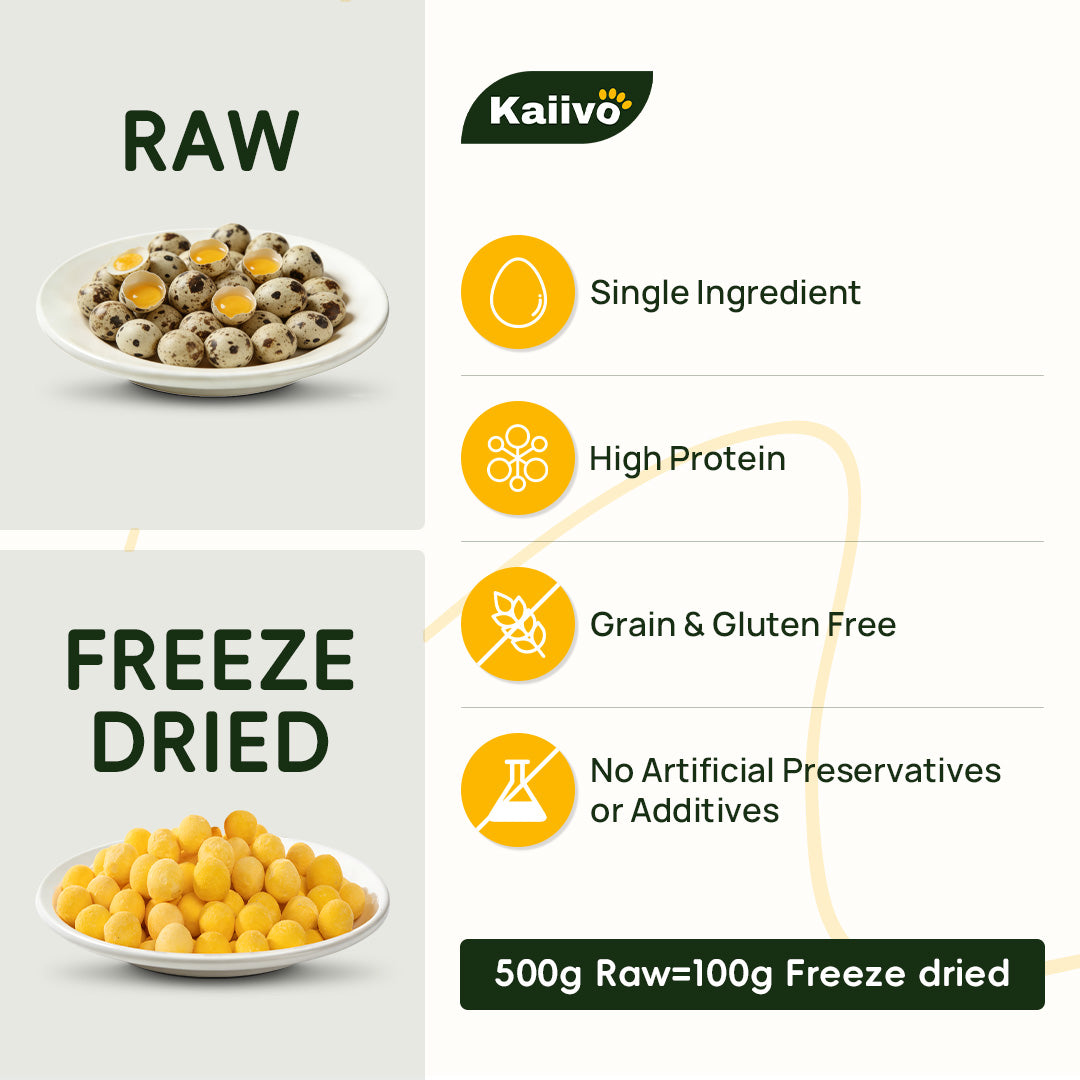
Kaiivo’s freeze-dried treats are based on simple, single-ingredient recipes.
Grain-free doesn’t always mean better nutrition
Even though grain-free treats sound modern and premium, they are not automatically superior for every dog. The nutritional value of a treat depends more on its overall formulation than whether it includes grains.
In fact, veterinary organizations have pointed out that some grain-free diets—especially those heavily reliant on legumes like peas and lentils—may be associated with heart health concerns in certain cases. The U.S. Food and Drug Administration has been investigating a possible link between some grain-free diets and canine dilated cardiomyopathy (DCM), although the exact cause has not been confirmed. (FDA investigation update: https://www.fda.gov/animal-veterinary/outbreaks-and-advisories/fda-investigation-potential-link-between-certain-diets-and-canine-dilated-cardiomyopathy)
This doesn’t mean grain-free is unsafe in general, but it does highlight that formulation balance matters more than any single label claim.
Where grain-free treats actually make sense
Grain-free treats are most useful when simplicity is the priority. Dogs with specific sensitivities may benefit from fewer ingredients, and many pet owners prefer treat options that avoid unnecessary fillers.
Freeze-dried treats like those from Kaiivo naturally fall into this category. Products such as freeze-dried chicken bites, beef liver cubes, or quail egg yolk treats are naturally grain-free because they’re made entirely from one ingredient. There’s no need for grains when the structure, flavor, and nutrition come directly from the raw material itself.
This is also why freeze-dried treats are often used for training or meal toppers—they’re clean, high-value rewards without extra complexity.
Freeze-dried treats and the grain-free connection
Freeze-drying plays a big role in why so many modern treats are grain-free. The process removes moisture at low temperatures, preserving nutrients and flavor while keeping the ingredient in its original form.
Because of this, brands don’t need to add flour, starch, or binders to hold the treat together. A piece of chicken stays chicken. Beef liver stays beef liver. Quail egg yolk stays quail egg yolk.
That’s why many Kaiivo products naturally align with grain-free expectations without needing to position themselves heavily around it. It’s simply the result of minimal processing and ingredient-focused design.
Kaiivo freeze-dried chicken treats are grain-free, offering a clean, simple option for dogs with sensitivities.
So what does grain-free really mean?
Grain-free doesn’t automatically mean healthier, and it doesn’t automatically mean better either. It usually means that grains were not included in the recipe, but that tells only part of the story.
What matters more is the quality of ingredients, how the treat is made, and whether it fits your dog’s individual needs.
Some dogs do great with grains. Some do better without them. Many don’t need grains in treats at all, especially when the product is already made from single, whole ingredients.
That’s why the focus is gradually shifting away from “grain-free vs not grain-free” and more toward simple, transparent formulations—something brands like Kaiivo are already leaning into with their freeze-dried, single-ingredient treats.
In the end, it’s less about avoiding grains and more about choosing food that feels clean, straightforward, and easy to understand when you look at the label.