

How Often Should You Give Dog Treats?
If you’ve ever tried to ignore a dog staring at you while you’re eating, you already know the real challenge isn’t if you give dog treats — it’s how often you should actually give them without overdoing it. The short answer: yes, dogs can have treats every day. The better question is how to keep it balanced so treats support health instead of quietly adding extra calories in the background.
The 10% Rule That Keeps Things in Check
Most veterinary nutrition guidelines suggest that treats should stay within 10% of a dog’s daily calorie intake. This is a widely used standard supported by the American Kennel Club (https://www.akc.org/expert-advice/nutrition/how-many-treats-can-dog-have/) and aligns with global feeding principles from the WSAVA Global Nutrition Committee (https://wsava.org/global-guidelines/global-nutrition-guidelines/).
In everyday terms, this means treats are a “bonus,” not a second meal. Even healthy treats still count toward total calories.

Why Treat Overfeeding Happens So Easily
Dogs don’t understand portions — they understand reward, smell and routine. That’s why it’s easy for treats to quietly add up during training, walks, and snack moments.
This becomes important because pet weight issues are more common than many people expect. According to the Association for Pet Obesity Prevention, more than half of dogs are overweight or obese in many regions. Extra weight isn’t just about appearance. The Banfield State of Pet Health Report (https://www.banfield.com/state-of-pet-health) links obesity in dogs with higher risks of joint problems, reduced mobility, and shorter lifespan.
So the issue isn’t treats themselves — it’s frequency without structure.
Puppies Can Have More Frequent Treats (But Smaller Ones)
Puppies learn through repetition. Sit, stay, come — everything is built on reward-based training. The American Veterinary Society of Animal Behavior (https://avsab.org/resources/position-statements/) supports frequent positive reinforcement during training because it strengthens learning and behavior formation.
That said, “more often” does not mean “more calories.” Puppy treats are usually tiny, sometimes just a crumb-sized reward, especially during early training stages.
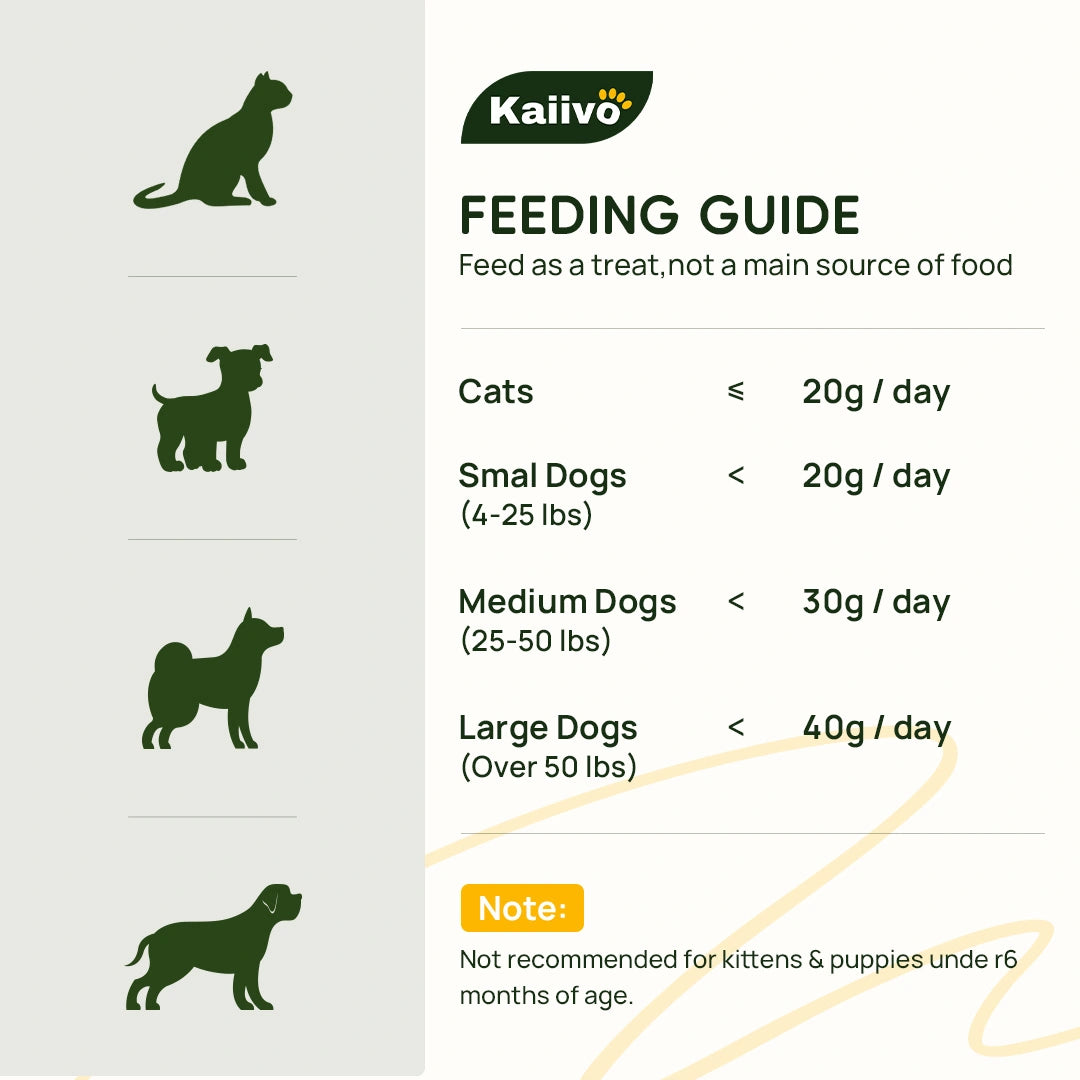
You should control feeding amount for different pets
Activity Level Changes Everything
A working dog running daily will burn far more energy than a senior dog with short walks. That’s why feeding guidelines from FEDIAF (https://europeanpetfood.org/self-regulation/nutritional-guidelines/) recommend adjusting total daily calories based on activity level — and that includes treats.
So yes, an active dog can often handle more treats than a low-energy dog, as long as total intake stays balanced.
Why Ingredient Quality Matters as Much as Frequency
When treats become a daily habit, ingredient quality starts to matter more than most people realize. Simple, single-ingredient treats are easier to control because you know exactly what your dog is eating. Freeze-dried options are especially popular because they avoid fillers and preserve the original food structure. Brands like Kaiivo focus on this kind of simple formulation, using ingredients like chicken, beef liver, and quail egg yolk without unnecessary additives. This makes portion tracking and digestion easier for many dogs.
From a food science perspective, freeze-drying treat is known to preserve nutrients more effectively than high-heat processing. Research from the U.S. National Library of Medicine (https://pmc.ncbi.nlm.nih.gov/articles/PMC8145322/) explains that freeze-drying helps retain nutritional quality by removing moisture at low temperatures instead of damaging heat methods.
Treats Are Not Just for Training
Treats aren’t only about teaching commands. They also support enrichment, bonding, appetite stimulation, and even hydration when rehydrated with water. Some dogs use treats as part of daily mental stimulation games, while others benefit from soft or rehydrated treats if they are older or picky eaters. So treats are less about “reward only” and more about interaction and daily care.
Freeze-dried treats make a great addition to meals.
Hydration Still Matters
Freeze-dried treats, in particular, contain very low moisture. That makes water intake important throughout the day. The American Veterinary Medical Association highlights that water is the most essential nutrient for pets, supporting digestion, circulation, and body temperature regulation.
So even high-quality treats should always be paired with enough fresh water.
How to Tell If Treats Are at a Healthy Level
There isn’t a universal number of treats that fits every dog. Instead, balance shows up in behavior and body condition. A healthy treat routine usually looks like steady weight, normal appetite at meals, consistent digestion, and stable energy levels. If treats start replacing meals or weight slowly increases, it usually means the balance has shifted too far.
A Simpler Way to Think About Treats
Treats don’t need to feel complicated. They are just small moments of reward built into daily life. When ingredients are simple and portions are controlled, treats become easy to manage instead of something to worry about.
That’s also why many pet owners are moving toward cleaner options like freeze-dried snacks from Kaiivo, where simplicity makes it easier to stay consistent without overthinking every bite. Dogs don’t measure calories or read nutrition labels. They respond to timing, taste, and attention. The goal isn’t to remove treats — it’s to keep them in balance so every reward still supports long-term health.