

Do Dog Treats Go Stale?
If you’ve ever opened a bag of dog treats and thought, “Hmm… these don’t smell quite right,” you’re not imagining things. Just like human snacks, dog treats absolutely can go stale—and sometimes even spoil.
But here’s the part most people don’t realize: “stale” doesn’t always mean “unsafe”… but it can turn into that pretty quickly depending on the type of treat and how you store it.
Let’s talk about what’s really happening inside that treat bag, how to tell if something’s off, and how to keep your dog’s snacks fresh and safe.
So do dog treats actually go stale?
Short answer: yes, they do.
Longer answer: dog treats don’t all age the same way. Some slowly lose freshness, while others can spoil faster due to moisture or fat content.
Dry treats like biscuits tend to go stale in the way crackers do—they get hard, lose flavor, and your dog might suddenly act less interested. On the other hand, meat-based or soft treats can go beyond stale and actually spoil, meaning bacteria or mold may develop.
Scientifically speaking, food spoilage is often driven by oxidation (fats breaking down) and microbial growth. According to the U.S. Food & Drug Administration, exposure to air, heat, and moisture accelerates these processes, leading to rancidity or contamination (FDA Food Safety Basics: https://www.fda.gov/food).

When dog treats have visible mold or white/green spots, this is a sign of going bad.
Why some treats last longer than others
Not all dog treats are built the same, and that has a big impact on shelf life.
Dry, baked treats are low in moisture, which makes them more shelf-stable. Moisture is a key factor in bacterial growth, so less water generally means a longer lifespan.
Now compare that to jerky or soft chews. These often contain higher moisture or fats, which makes them more prone to spoilage once opened.
Freeze-dried treats sit in an interesting middle ground. Because the freeze-drying process removes almost all moisture while preserving nutrients, they tend to last longer than fresh or soft treats—but only if stored properly. The USDA explains that reducing water activity is one of the most effective ways to prevent microbial growth in food (USDA Food Safety: https://www.usda.gov).
That’s exactly why brands like Kaiivo use freeze-drying for their treats. By gently removing moisture while locking in nutrients, the treats stay shelf-stable without needing artificial preservatives. It’s a simple approach, but it makes a real difference in both safety and freshness.
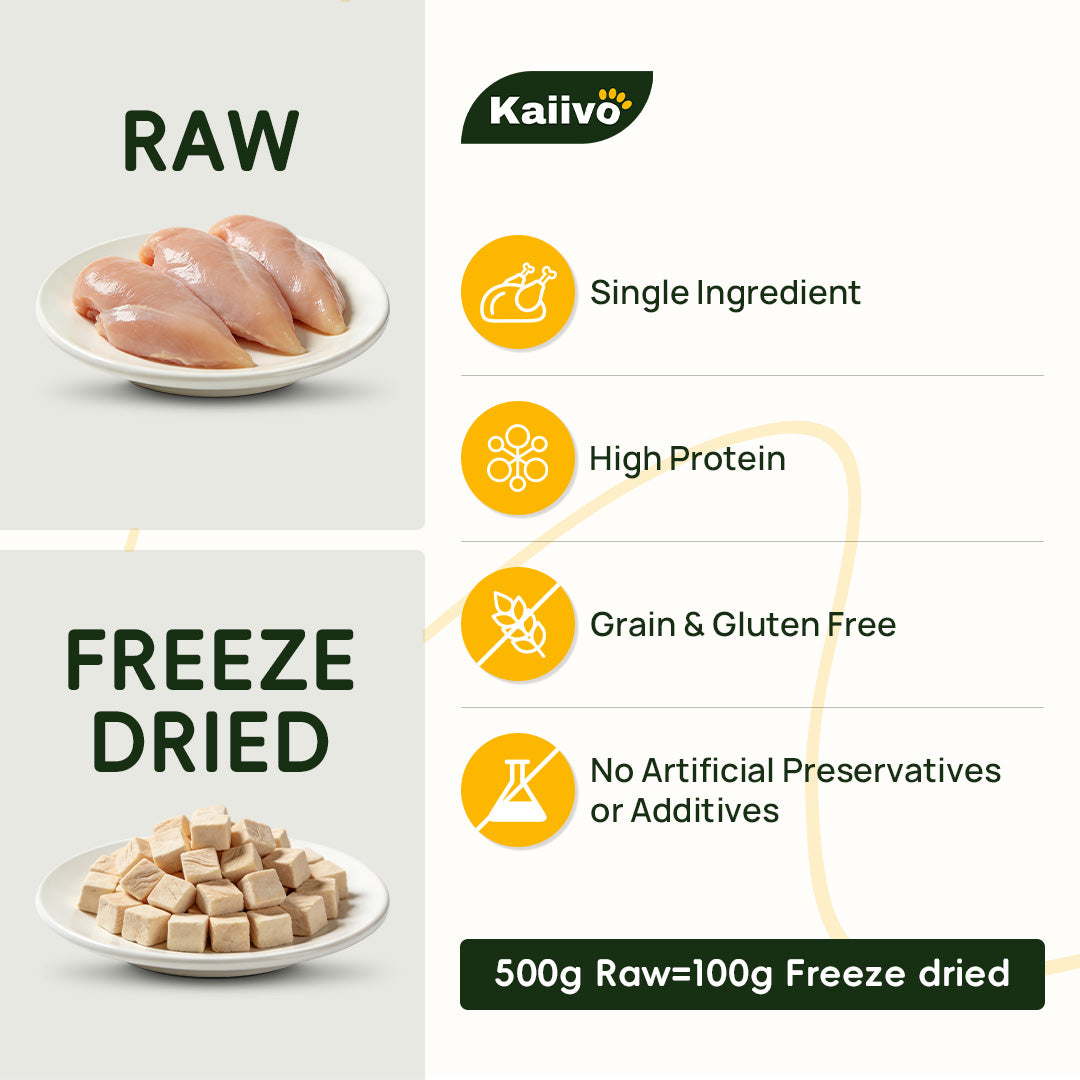
Kaiivo dog treats are freeze-dried and last longer than other brands.
How to tell if dog treats have gone stale (or worse)
Dogs aren’t always picky, but they do notice changes. If your dog suddenly loses interest in a treat they used to love, it might not just be mood—it could be the treat.
A stale treat usually shows subtle changes. The smell becomes dull or slightly off, the texture changes, or the flavor just isn’t appealing anymore.
Spoiled dog treats, though, are easier to spot—and you definitely don’t want your dog eating them.
Watch for:
- A sour, rancid, or unusual smell
- Visible mold or white/green spots
- Sticky, overly soft, or strangely hard texture
- Color changes or oily residue
Rancidity is especially important to watch for in fatty treats. When fats oxidize, they can produce harmful compounds. Research published by the National Center for Biotechnology Information notes that oxidized fats may negatively impact animal health over time (NCBI: https://www.ncbi.nlm.nih.gov).
Storage matters more than you think
Here’s where a lot of people accidentally shorten the life of their dog treats.
Once you open a bag, the clock starts ticking. Air, humidity, and temperature all begin to affect the treats immediately.
Keeping treats fresh isn’t complicated, but it does require a bit of consistency.
Store them in a cool, dry place. Avoid leaving the bag open or loosely sealed. Using an airtight container can make a noticeable difference, especially for freeze-dried or meat-based treats.
If you live somewhere humid, this becomes even more important. Moisture in the air can sneak into the treats and speed up spoilage.
Freeze-dried treats, like the single-ingredient options from Kaiivo, are designed to be shelf-stable—but even those should ideally be finished within about a month after opening for best quality.
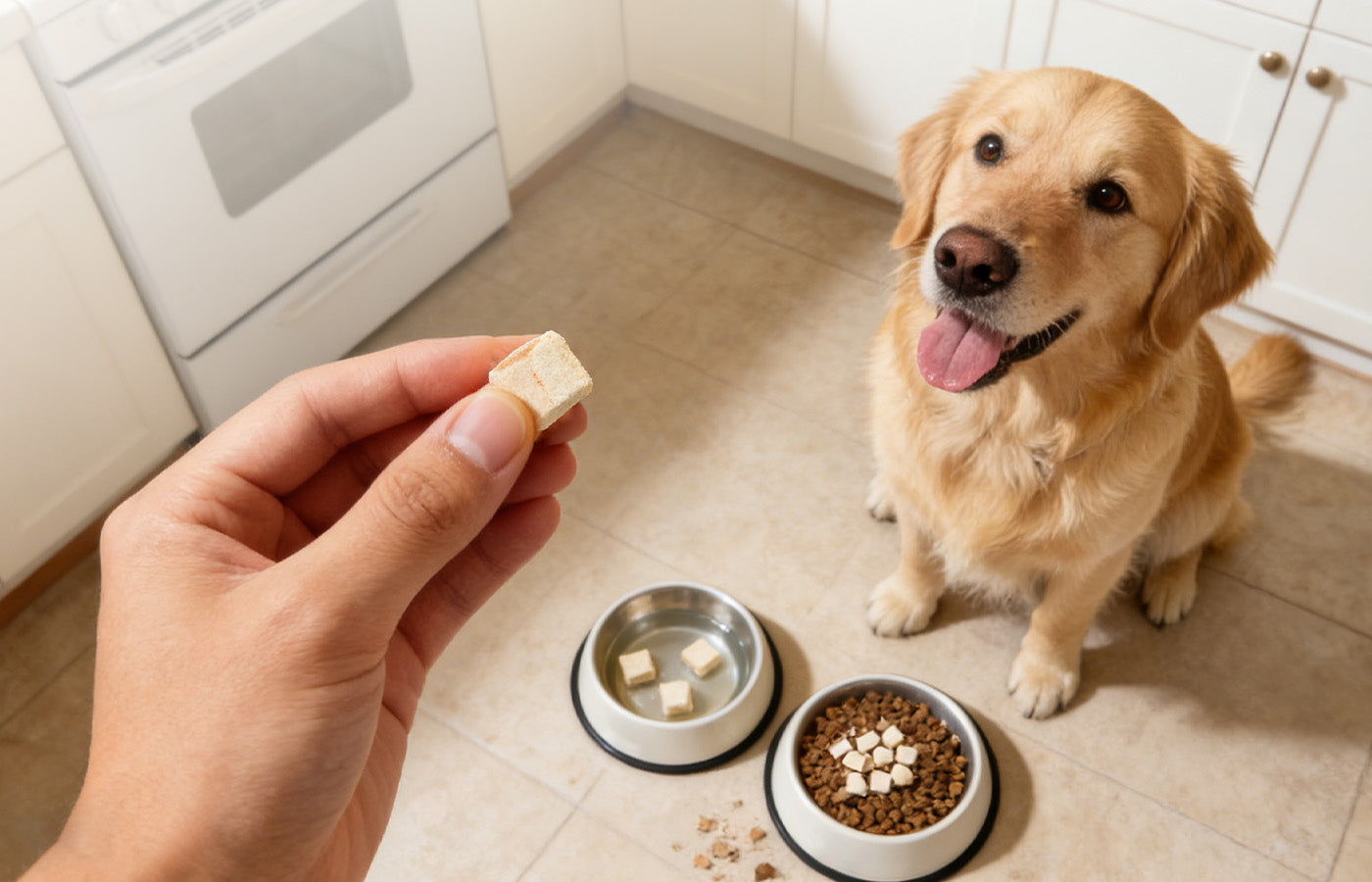
Store Kaiivo freeze dried chicken in a cool, dry place. Unopened, they have a shelf life of 18 months; after opening, seal tightly and finish within 1 month.
What happens if a dog eats stale treats?
If a treat is just stale (not spoiled), the worst-case scenario is usually… nothing. Your dog might not enjoy it as much, or they might refuse it altogether.
But if a treat has actually gone bad, that’s a different story.
Spoiled treats can carry bacteria or mold that may cause digestive upset. According to the American Veterinary Medical Association, contaminated food can lead to symptoms like vomiting, diarrhea, or lethargy in pets (Can Dog Treats Cause Diarrhea?).
So while a slightly stale biscuit isn’t a big deal, anything that smells off or looks questionable should go straight to the trash.

Why ingredient quality also plays a role
Here’s something that often gets overlooked: what’s inside the treat affects how it ages.
Treats loaded with artificial preservatives may last longer on the shelf, but that doesn’t necessarily mean they’re better.
On the flip side, clean-label treats with minimal ingredients—like single-ingredient freeze-dried options—skip unnecessary additives, which many pet owners prefer. The trade-off is that you need to store them properly and pay attention after opening.
That’s part of the philosophy behind Kaiivo: simple ingredients, no fillers and gentle processing. Their freeze-dried treats—like chicken, beef liver, or quail egg yolk—focus on keeping things natural while still being practical for everyday feeding.
A simple way to think about it
If you wouldn’t eat it yourself because it smells weird or looks off, don’t give it to your dog.
Dogs trust us to make those calls for them. And while they might happily eat something questionable, their stomachs won’t always thank them later.
Keep it fresh, keep it simple
Dog treats going stale isn’t something to stress over—but it is something to stay aware of.
A little attention to storage, a quick smell check now and then, and choosing well-made treats go a long way.
And if you ever find yourself unsure about a treat sitting in the pantry, it’s usually safer to replace it. Your dog will be just as happy with a fresh one—and probably more excited too.