

Can Dog Treats Cause Pancreatitis?
If you’ve ever tossed your dog a treat just because they gave you that look, you’re not alone. Treats are part of the fun of having a dog. But every now and then, a question pops up that makes people pause:
Can dog treats actually cause pancreatitis?
The honest answer is yes—but it’s not as simple as “treats are bad.” It’s more about what kind of treats, how often and how your dog’s body handles them.
What Is Pancreatitis in Dogs?
Pancreatitis happens when the pancreas becomes inflamed. This organ plays a quiet but essential role in digestion and blood sugar balance. When it’s working normally, enzymes are released at the right time to help break down food. But when inflammation kicks in, those enzymes can activate too early and start irritating the pancreas itself. That’s when things go from normal to uncomfortable, and sometimes serious.
According to the American Kennel Club (AKC), diet—especially fat intake—is one of the biggest triggers behind pancreatitis in dogs (Source: https://www.akc.org/expert-advice/health/pancreatitis-in-dogs/).

Digestive system in dogs related to pancreatitis
How Treats Can Trigger Pancreatitis
Treats don’t automatically cause problems, but certain types can put extra stress on the pancreas. Dogs process fat differently than humans do, and when they suddenly eat something rich or greasy, it can overwhelm their system. That’s when inflammation becomes more likely.
Foods like fatty meats, cheese-heavy snacks, or oily leftovers are common triggers. Even some packaged treats can be surprisingly high in fat, depending on how they’re made. VCA Animal Hospitals notes that high-fat meals are one of the most frequent causes of acute pancreatitis in dogs.
Not All Treats Are the Same
Once you start looking closer, it becomes clear that “treats” is a very broad category. Some are heavy, rich, and packed with fats, while others are simple and lean. The difference matters more than most people expect.
For example, freeze-dried treats made with a single ingredient tend to be easier to understand and portion correctly. That’s part of the idea behind brands like Kaiivo, which focus on clean, plant-conscious wellness and straightforward ingredient lists. When a treat is just chicken or just egg yolk, there’s less guesswork involved.
That said, even natural treats need to be used thoughtfully. A high-fat ingredient like egg yolk can be nutritious in small amounts but becomes a different story if it’s overfed. On the other hand, leaner options like freeze-dried chicken are generally easier on the pancreas when given in moderation.
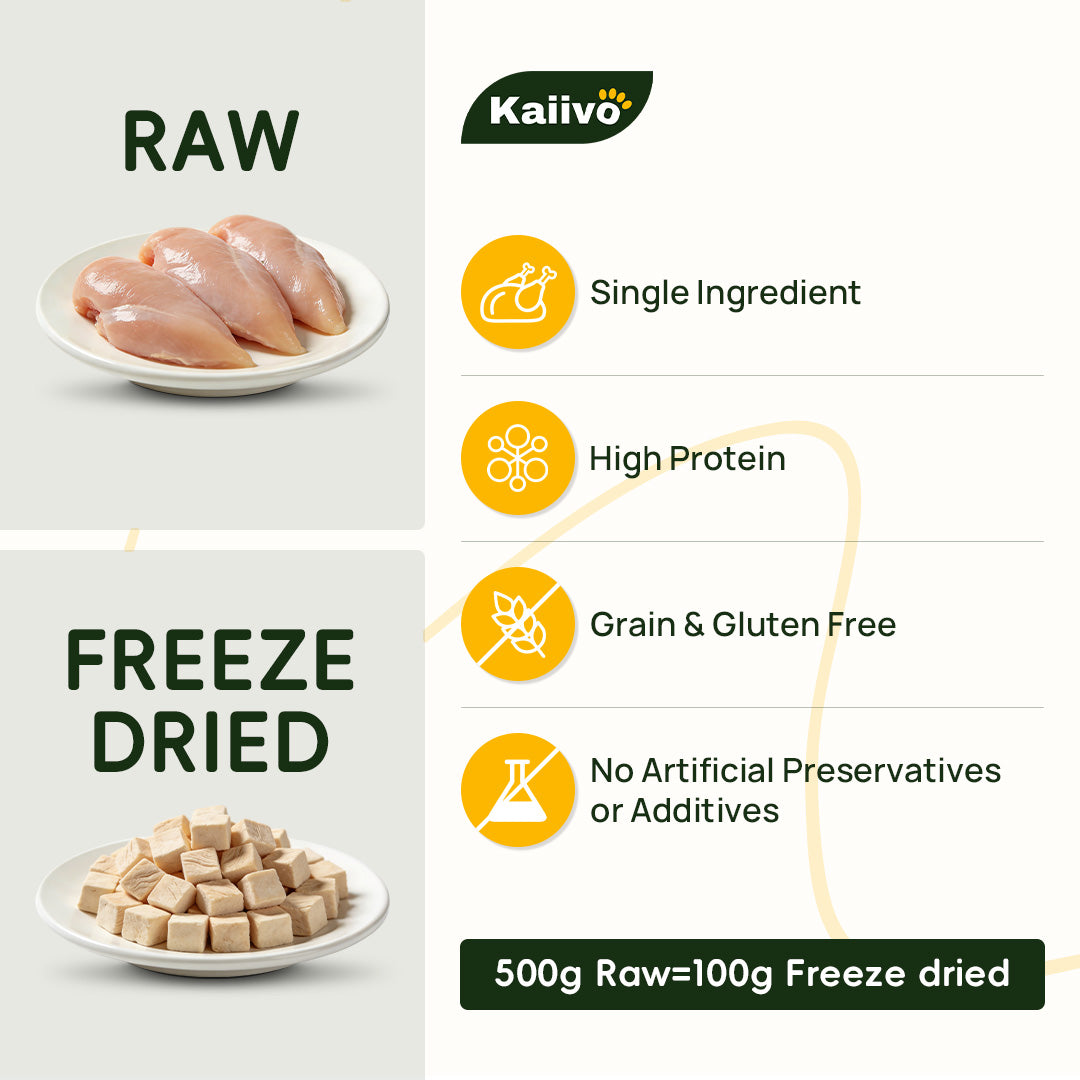
Kaiivo Freeze-Dried Pure Chicken with Single Ingredient
Which Dogs Are More Sensitive?
Not every dog reacts the same way to treats. Some can handle occasional rich snacks without any issue, while others are much more sensitive.
Dogs that are overweight, older, or part of certain breeds tend to have a higher risk. Miniature Schnauzers, for example, are often mentioned because they’re more prone to fat metabolism issues. Dogs that have already experienced pancreatitis are also more likely to have it happen again, which means their diet needs extra attention.
Signs Something Isn’t Right
When pancreatitis develops, the symptoms usually don’t go unnoticed. A dog might suddenly lose interest in food, seem unusually tired, or start vomiting. Some dogs take on a hunched posture because their abdomen is uncomfortable, while others may have diarrhea or just seem “off” in a way that’s hard to describe but easy to notice.
The ASPCA highlights vomiting, abdominal pain, and lethargy as common signs to watch for (source: https://www.aspca.org/news/pancreatitis-learn-symptoms-help-protect-your-dogs-and-cats).

A dog vomits
Feeding Treats Without the Risk
Treats don’t need to disappear from your routine—they just need a bit more intention behind them. Keeping treats to a small portion of daily calories helps prevent overload, and paying attention to fat content makes a bigger difference than most people think.
It also helps to mix things up instead of relying on one type of treat all the time. Rotating between richer and leaner options can balance things out, especially if your dog tends to be sensitive. Following feeding guidelines on the package is another small step that goes a long way, even if it feels easy to ignore in the moment.
Kaiivo’s approach fits naturally into this mindset. With single-ingredient freeze-dried treats and herbal-based supplements, the focus is on keeping things simple, gentle, and consistent. That kind of approach doesn’t just make feeding easier—it also reduces the chances of accidentally overdoing it.

You need to control the feeding amount when feeding freeze dried pure chicken
Where Herbal Support Comes In
Beyond treats, some pet owners look at broader wellness support, especially for digestion and inflammation. This is where herbal ingredients start to come into the picture.
Kaiivo incorporates herbs like turmeric, chamomile, and astragalus into its supplement line. These ingredients are often associated with anti-inflammatory or digestive-support properties, and while they’re not a substitute for medical care, they can complement a balanced diet when used appropriately.
The idea is not to rely on one solution, but to build a routine that supports the body gently over time.

Kaiivo Hip and Joint Herbal Chews with turmeric
So What’s the Real Takeaway?
Dog treats can absolutely play a role in pancreatitis—but usually not on their own. It’s more about patterns than single moments. A high-fat treat here and there might be fine for one dog and too much for another.
When treats are simple, portioned carefully, and chosen with fat content in mind, they’re much less likely to cause issues. And when they’re paired with a thoughtful, balanced routine—like the kind Kaiivo is built around—they can stay exactly what they’re meant to be: a small, happy part of your dog’s day.