

Can Dog Treats Be Given to Cats? Here’s What Pet Parents Should Know
If you live with both a dog and a cat, you’ve probably seen this exact scene before: you open the dog treat bag, and suddenly your cat shows up like they’ve been monitoring the kitchen all along.
So the question makes total sense: can dog treats be given to cats?
The short answer is yes, sometimes. But that doesn’t mean all dog treats are suitable for cats, or that they should become part of your cat’s daily routine.
A lot depends on what kind of treat it is, what ingredients are inside, and how often your cat is eating it. Some simple dog treats can work just fine as an occasional snack for cats. Others are clearly made for dogs only and are better kept out of feline reach.
Yes, some dog treats are okay for cats — but only the simple ones
Not every dog treat is automatically “wrong” for cats. In fact, if a treat is made from a single animal-based ingredient and doesn’t contain anything extra, many cats can eat a small amount without any issue.
The reason this works is simple: cats naturally do well with animal protein, especially when it’s minimally processed. A small piece of freeze-dried chicken or beef liver is a lot different from a heavily flavored chewy stick made for a large dog.
That said, “can eat” and “should regularly eat” are two different things.
Cats have their own nutritional requirements, and they are much more dependent on nutrients from animal tissue than dogs are. According to the Merck Veterinary Manual, cats are obligate carnivores, which means they require nutrients that are naturally found in animal-based foods, including taurine and certain amino acids. (Source: https://www.merckvetmanual.com/cat-owners/selecting-and-providing-a-home-for-a-cat/proper-nutrition-for-cats)
So if your cat steals one dog treat once in a while, that’s usually not a big deal. But if your cat is eating dog treats often, they’re no longer just “sharing a snack” — they’re eating something that wasn’t really designed for them.
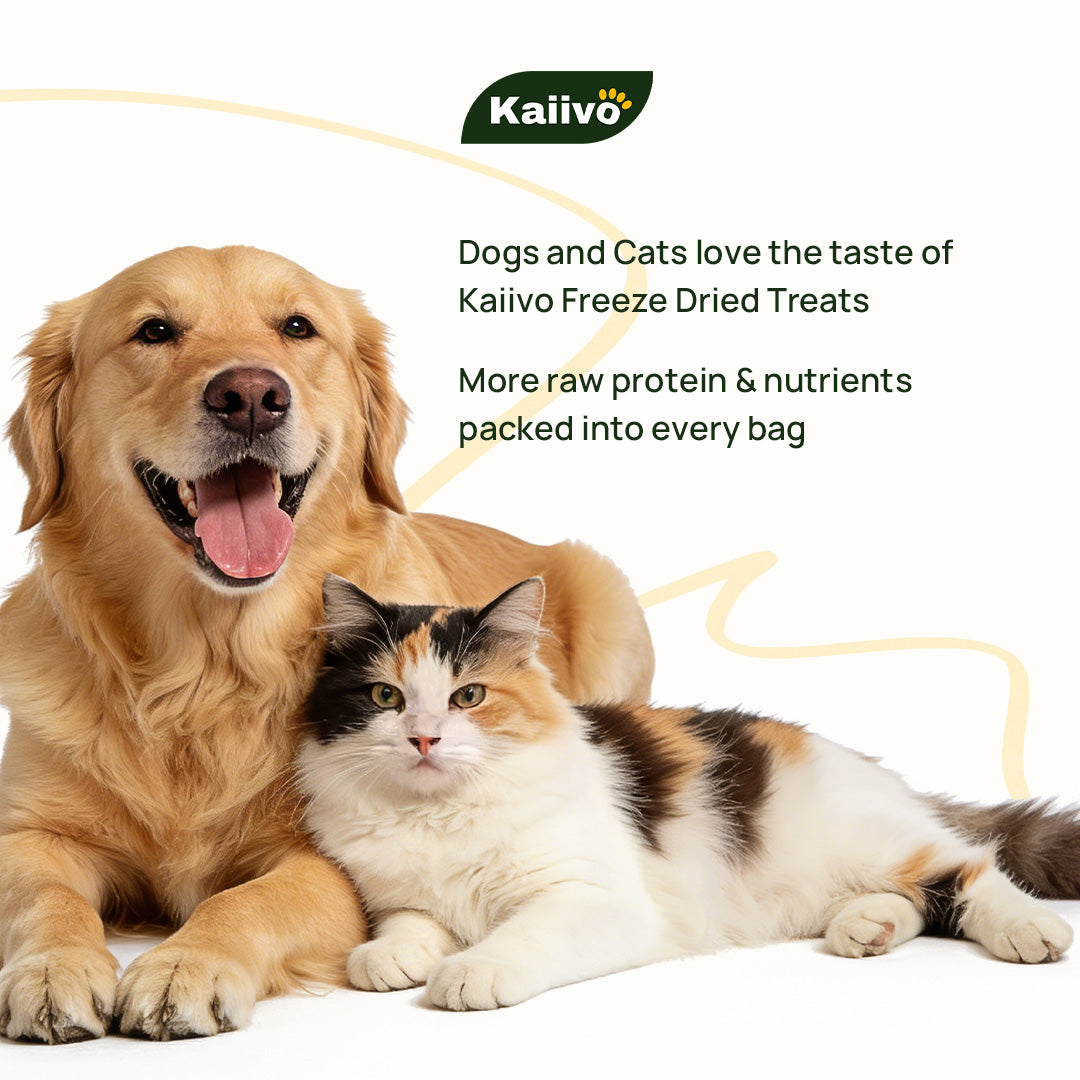
Freeze-dried pure chicken treats can be given to both cats and dogs. Please control the portion size and avoid feeding them to pets allergic to chicken.
The safest dog treats for cats are usually freeze-dried meat treats
If you’re going to let your cat have a dog treat once in a while, the safest options are usually the simplest ones.
This is where freeze-dried treats tend to stand out. They’re often made with just one ingredient, they’re easy to break into small pieces, and they don’t usually come loaded with salt, sugar, sauces, or random flavor coatings.
That’s a big reason why simple treats like freeze-dried chicken, freeze-dried beef liver, or freeze-dried quail egg yolk are often much easier to share in a multi-pet household.
This also fits nicely with what Kaiivo is trying to do as a brand. The idea behind Kaiivo’s treat line is pretty straightforward: clean ingredients, no unnecessary fillers, and simple snacks pets actually enjoy. That kind of approach matters a lot more when you’ve got a curious cat trying to sample the dog’s stash.
And honestly, cats tend to have very little patience for overcomplicated snacks anyway.
Why many dog treats are not a good match for cats
The issue with dog treats is not always that they’re dangerous. Sometimes they’re just too much for a cat.
Dogs and cats don’t eat the same way, don’t chew the same way, and definitely don’t tolerate all treats equally. Something made for a 60-pound dog can be way too hard, too rich, or too large for a cat.

Please follow the feeding guidelines and adjust feeding for cats and dogs accordingly.
A lot of common dog treats are designed for chewing, gnawing, or prolonged eating, which is fine for dogs but not especially appropriate for cats. Hard dental sticks, rawhide-style chews, and oversized crunchy biscuits aren’t really made with feline mouths or digestion in mind.
Then there’s the ingredient side of things. Many dog treats include flavorings, smoke extracts, glycerin, sweeteners, or added fats to make them more appealing to dogs. None of that automatically means “toxic,” but it does mean your cat is more likely to end up with an upset stomach after helping themselves.
That’s why the cleaner and simpler the treat is, the better the odds that it’s cat-friendly.
Some dog treats should stay dog-only
There are definitely certain dog treats that should not be shared with cats, even if your cat seems extremely interested in them.
Rawhide and beefhide chews are a good example. These are made to be long-lasting dog chews, and they’re simply not appropriate for cats. The texture is wrong, the chewing style is wrong, and the risk is not worth it.

The same goes for large dental chews, thick jerky strips, and heavily processed chew sticks with lots of added flavoring. These products are usually made with a dog’s chewing behavior in mind, not a cat’s.
So if your cat is eyeing something like a wrapped chew stick or a dense long-lasting chew, it’s better to keep that one off-limits.
If you’re choosing treats for a household with both species, it’s usually smarter to keep dog chews and shared treats as two completely separate categories.
Ingredients matter more than the package label
Sometimes people focus too much on whether the bag says “dog” or “cat,” when the real answer is often sitting in the ingredient list.
A treat labeled for dogs can still be relatively safe for a cat if it contains one clean, familiar animal ingredient and nothing concerning. On the flip side, a dog treat can become a terrible option for cats if it’s full of unnecessary extras.
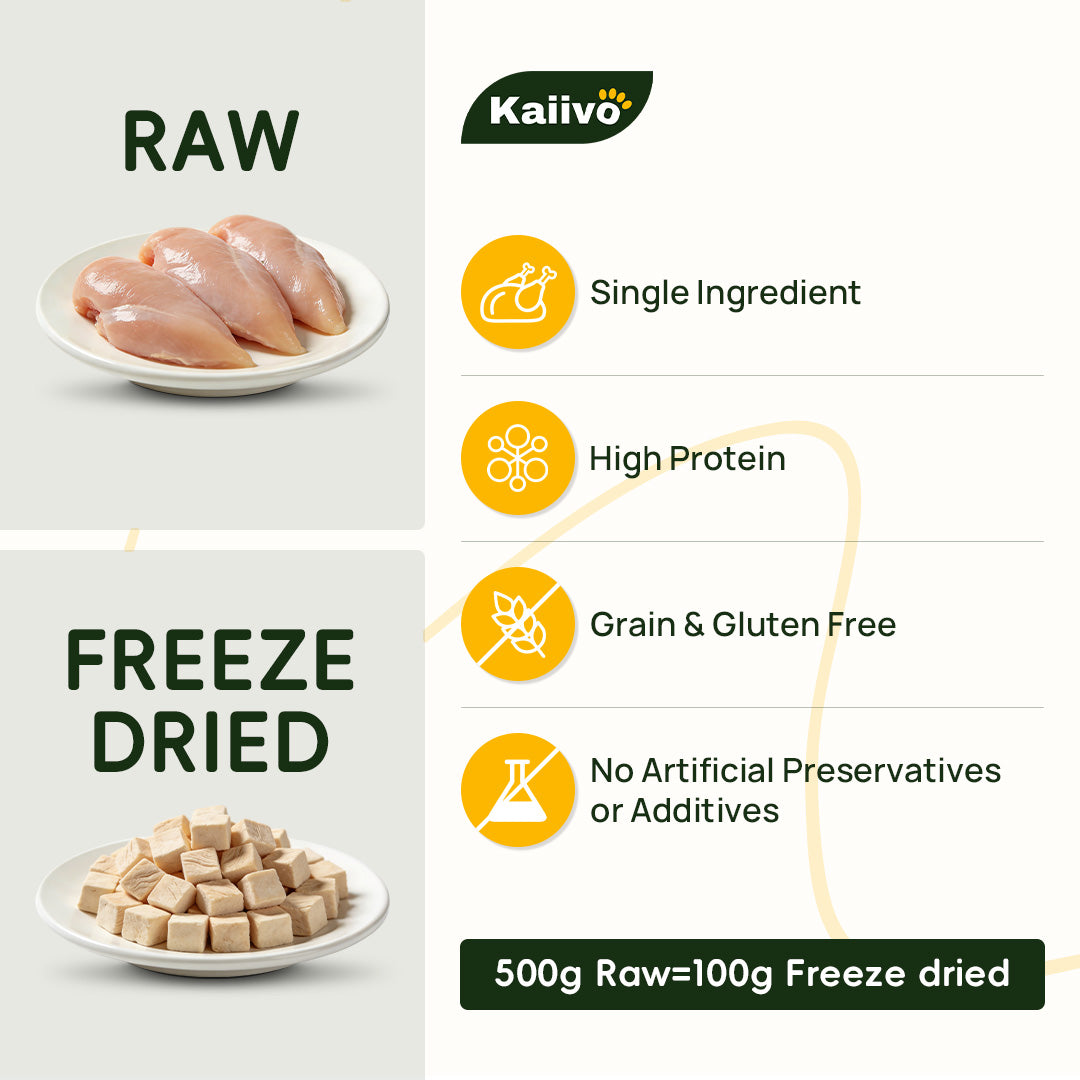
Kaiivo freeze-dried pure chicken treats are made with a single ingredient for cats and dogs
This is where it helps to slow down and actually read the back of the package.
According to the ASPCA, ingredients like onion, garlic, chocolate, and excessive salt can be harmful to pets, and cats are especially sensitive to certain compounds found in onion and garlic. (Source: ASPCA - https://www.aspca.org/pet-care/aspca-poison-control/people-foods-avoid-feeding-your-pets)
That means if a dog treat includes savory seasonings, “roasted” coatings, or “smoky” flavor systems, it’s probably not something your cat should be nibbling on.
Another ingredient worth being careful with is xylitol, which is extremely dangerous for dogs and never belongs in a pet treat that might be casually shared between animals. While xylitol poisoning is more famously associated with dogs, it’s still not something you want anywhere near your pets. (Source: ASPCA - https://www.aspca.org/news/updated-safety-warning-xylitol-how-protect-your-pets)
So if the ingredient panel reads more like a human snack food than a simple pet treat, your cat can skip it.

Can cats eat freeze-dried chicken, beef liver, or quail egg yolk dog treats?
In many cases, yes — and these are actually some of the better examples of dog treats that cats can have in moderation.
A freeze-dried chicken treat is usually one of the easiest options because it’s lean, high in protein, and familiar to both dogs and cats. It also tends to be easy to crumble over food, which is useful if your cat prefers tiny bites or likes treats as a meal topper rather than a snack.
Freeze-dried beef liver is another popular option, especially because many cats go crazy for the smell. It’s rich, flavorful, and easy to portion into very small pieces.
Even freeze-dried quail egg yolk can be a nice occasional treat for cats when fed in moderation. Egg yolk naturally contains fats and nutrients that many pet parents find appealing, and its crumbly texture often makes it easy to use as a topper.
That’s why, from your current Kaiivo lineup, the most cat-friendly options are clearly the Freeze-Dried Chicken Bites, Freeze-Dried Beef Liver Bites, and Freeze-Dried Quail Egg Yolk Bites.
These make much more sense for both dogs and cats than anything in the chew category.
How much is too much?
Even if a dog treat is technically safe for your cat, it still shouldn’t become a major part of their diet.
Treats are supposed to stay in the “little extra” category. They are not meant to replace balanced cat food or become the thing your cat starts holding out for at mealtime.
A good rule is to keep it very small. One or two little pieces is usually more than enough for most cats, especially with richer treats like liver or egg yolk.
If you’re trying a new treat for the first time, it’s smart to start with a tiny amount and just see how your cat reacts over the next day. Some cats handle new proteins perfectly well. Others respond with dramatic side-eye, suspicious sniffing, or digestive revenge.
That part is less science and more cat personality.
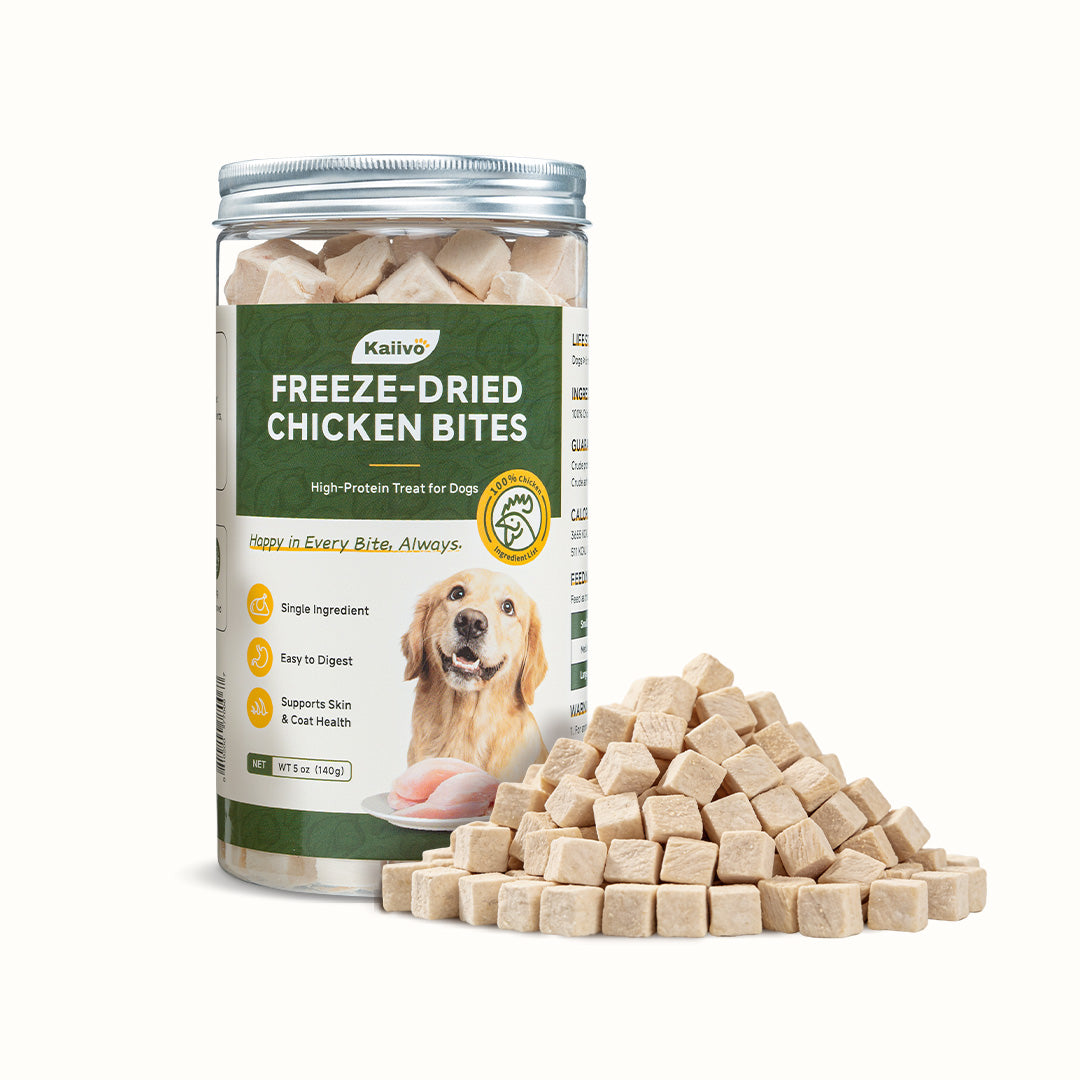
Kaiivo freeze-dried pure chicken treats come in small pieces, making it easy to start with a small amount when feeding your cat.
What should pet parents do in a dog-and-cat household?
If you’ve got both species at home, the easiest solution is not to overcomplicate it.
Instead of trying to make every dog treat “cat compatible,” it usually works better to keep a few simple, shared-safe treats around — especially freeze-dried single-ingredient options — and then keep the more dog-specific chews separate.
That way, if your cat decides they absolutely must participate in snack time, you already have something much more appropriate to offer.
This is actually where a clean-label treat philosophy helps. Kaiivo’s positioning around natural, simple, thoughtfully made pet products works especially well in households where dogs and cats are both part of the daily routine. Some treats should be species-specific. But when a treat is simple enough, it can make life easier for everyone — including the furry snack thief sitting on your counter.
Conclusion
So some of dog treats can be given to cats if the treat is simple, meat-based, easy to chew, and free from harmful additives, your cat can usually enjoy a small amount once in a while without a problem.
But if it’s a rawhide chew, oversized biscuit, heavily seasoned jerky, or anything with a long complicated ingredient list, it’s better left in the dog zone.
If you want the safest and easiest option, stick with single-ingredient freeze-dried treats. They’re usually the most shareable, the least complicated, and the most likely to get approval from both sides of the food bowl.