

Are Dog Treats Regulated in the USA? What Pet Owners Should Know
You grab a bag of dog treats—maybe freeze-dried chicken, maybe something chewy—and it looks clean, healthy and full of promises. But then the question hits:
Is this actually regulated? Or is it just out there on the market?
The answer is reassuring, but with a bit of nuance.
Yes, dog treats are regulated in the United States—but they’re regulated as food, not as medicine.
That distinction shapes everything from ingredients to labeling to how much oversight happens before products reach your dog’s bowl.

Kaiivo treats are FDA regustered facility and GMP certified
Who regulates dog treats in the U.S.?
Dog treats fall under the authority of the U.S. Food and Drug Administration, specifically through its Center for Veterinary Medicine. What surprises a lot of people is that treats aren’t treated differently from regular dog food. Legally, they’re all part of the same category: animal food.
That means the same basic rules apply across the board. According to the FDA, pet food products must be safe to eat, produced under sanitary conditions, contain no harmful substances, and be truthfully labeled (https://www.fda.gov/animal-veterinary/animal-food-feeds/pet-food). Whether it’s kibble, canned food, or a bag of freeze-dried bites, those standards are the foundation.
What does regulation actually mean for dog treats?
Here’s where things get interesting. When something is regulated as food, the focus is on safety, cleanliness and accurate labeling, not on proving that the product delivers specific health outcomes.
In practical terms, companies are expected to make sure their treats are made with safe ingredients, processed in clean facilities, and labeled in a way that reflects what’s actually inside. If something goes wrong—like contamination or misleading packaging—the FDA can step in with warnings, recalls, or enforcement actions.
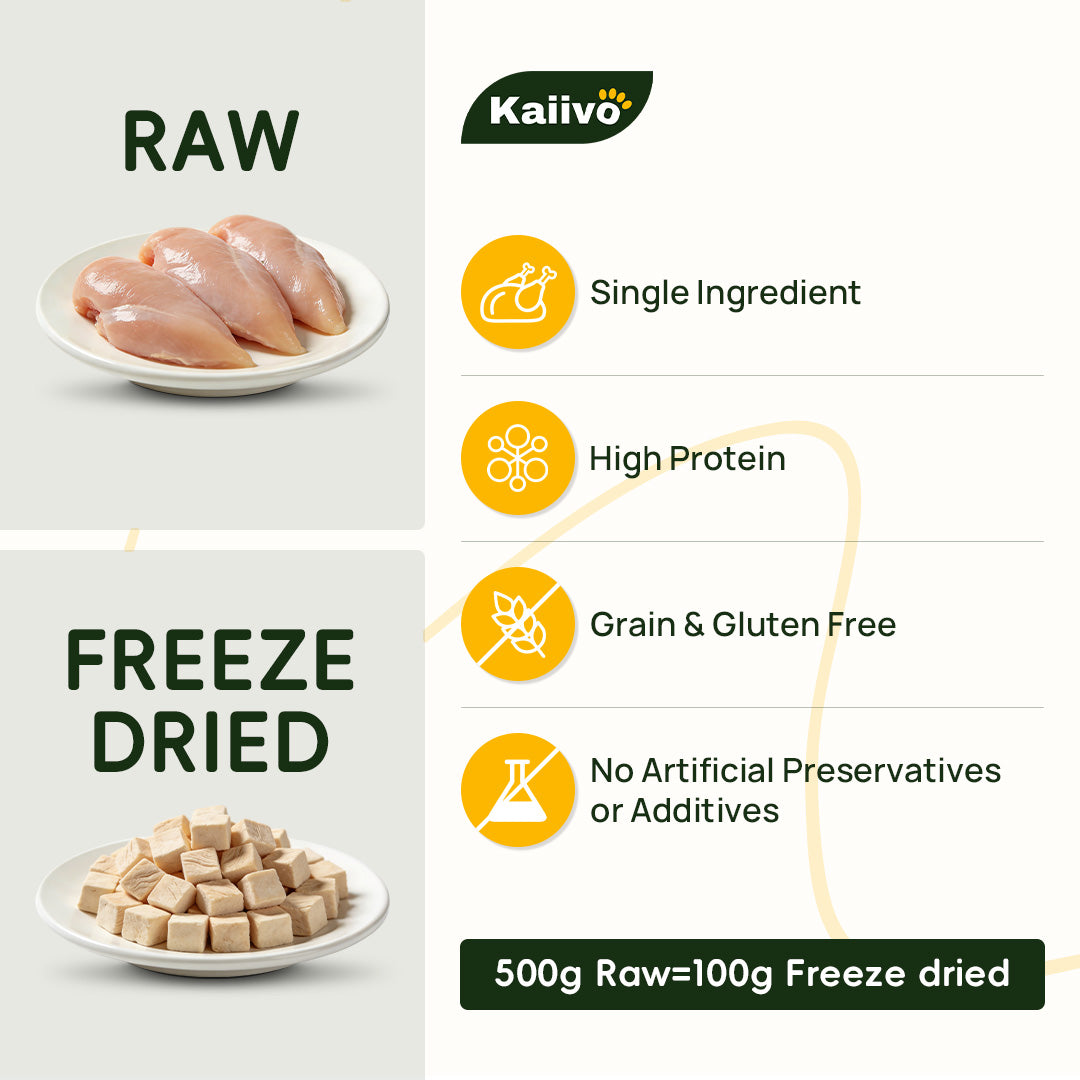
Kaiivo Freeze-Dried Pure Chicken Bites Advantages
What doesn’t happen, though is pre-approval. Dog treats don’t need to be reviewed or approved by the FDA before they’re sold. That responsibility sits with the manufacturer. So while there is a regulatory framework, it relies heavily on companies doing things properly from the start.
Why there’s no pre-approval step
If you’re used to how medications work, this might feel a bit surprising. Drugs must go through extensive testing before they ever reach consumers. Dog treats don’t follow that path because they’re classified as food.
This system is designed to keep products accessible and innovation moving, but it also means that quality can vary between brands. Some companies invest heavily in sourcing, testing, and manufacturing standards, while others take a more basic approach. The rules set a baseline, but they don’t guarantee uniform quality across the market.
That’s why details like where a product is made, how ingredients are sourced, and how transparent the labeling is can tell you a lot about what you’re buying.
What about ingredients—are they controlled?
Ingredients used in dog treats must either be approved food additives or fall under what’s considered GRAS (Generally Recognized As Safe). That sounds reassuring—and it is—but it doesn’t mean all ingredients are equal in quality.
Research referenced by the National Institutes of Health highlights that variability in pet food products is quite common, especially when it comes to ingredient consistency and nutritional value (https://www.ncbi.nlm.nih.gov/pmc/articles/PMC7802882/). So while a treat may meet regulatory standards, the actual quality of the ingredients can still differ depending on how the product is made.
This is one reason why many pet owners are moving toward simpler formulations. When you see a single-ingredient treat—like freeze-dried chicken or whole quail egg yolk—it’s easier to understand exactly what your pet is getting.

Kaiivo Freeze-Dried Pure Quail Egg Yolk Bites Advantages
Can dog treats make health claims?
This is where regulation draws a firm line. Dog treats can talk about general nutritional support, like being high in protein or helping maintain skin and coat health. What they can’t do is claim to treat, cure, or prevent diseases.
If a product crosses into those kinds of claims, it’s no longer just a treat—it becomes an animal drug and must go through a much stricter FDA approval process. The FDA clearly outlines this distinction in its guidance on pet products (https://www.fda.gov/animal-veterinary/animal-health-literacy/fdas-regulation-pet-food).
That’s why you’ll see phrases like “supports healthy digestion” instead of anything that sounds like a medical promise. The wording isn’t just marketing—it’s part of staying compliant with the law.
How processing affects quality and why freeze-dried stands out
Regulation ensures safety, but it doesn’t dictate how minimally or heavily a product is processed. That’s where manufacturing choices come in.
Freeze-drying, for example, is a method that removes moisture from raw ingredients while keeping much of their original structure, flavor, and nutrients intact. Because it doesn’t rely on high heat or heavy processing, it allows brands to avoid adding artificial preservatives while still maintaining shelf stability.
From a practical standpoint, this means treats can stay simple. Instead of long ingredient lists, you’ll often see just one ingredient—like chicken, beef liver, or egg yolk. For pet owners who prefer clean-label products, that simplicity makes a big difference.
Where Kaiivo fits into U.S. regulations
Kaiivo’s pet treats are developed to align closely with how the U.S. regulates pet food. All products are made in FDA-registered facilities and follow GMP-certified manufacturing standards, which are widely recognized benchmarks for quality and consistency.
Rather than relying on complicated formulations, Kaiivo focuses on clean, straightforward ingredients and gentle processing methods. Freeze-dried treats like chicken bites, beef liver, and whole quail egg yolks are designed to keep the ingredient list simple while preserving natural nutrients and flavor.
This approach fits naturally within the FDA’s pet food framework. The products are positioned for everyday enjoyment and nutritional support, without making drug-level claims. That means they stay compliant with U.S. regulations while still delivering the kind of transparency many pet owners are looking for.
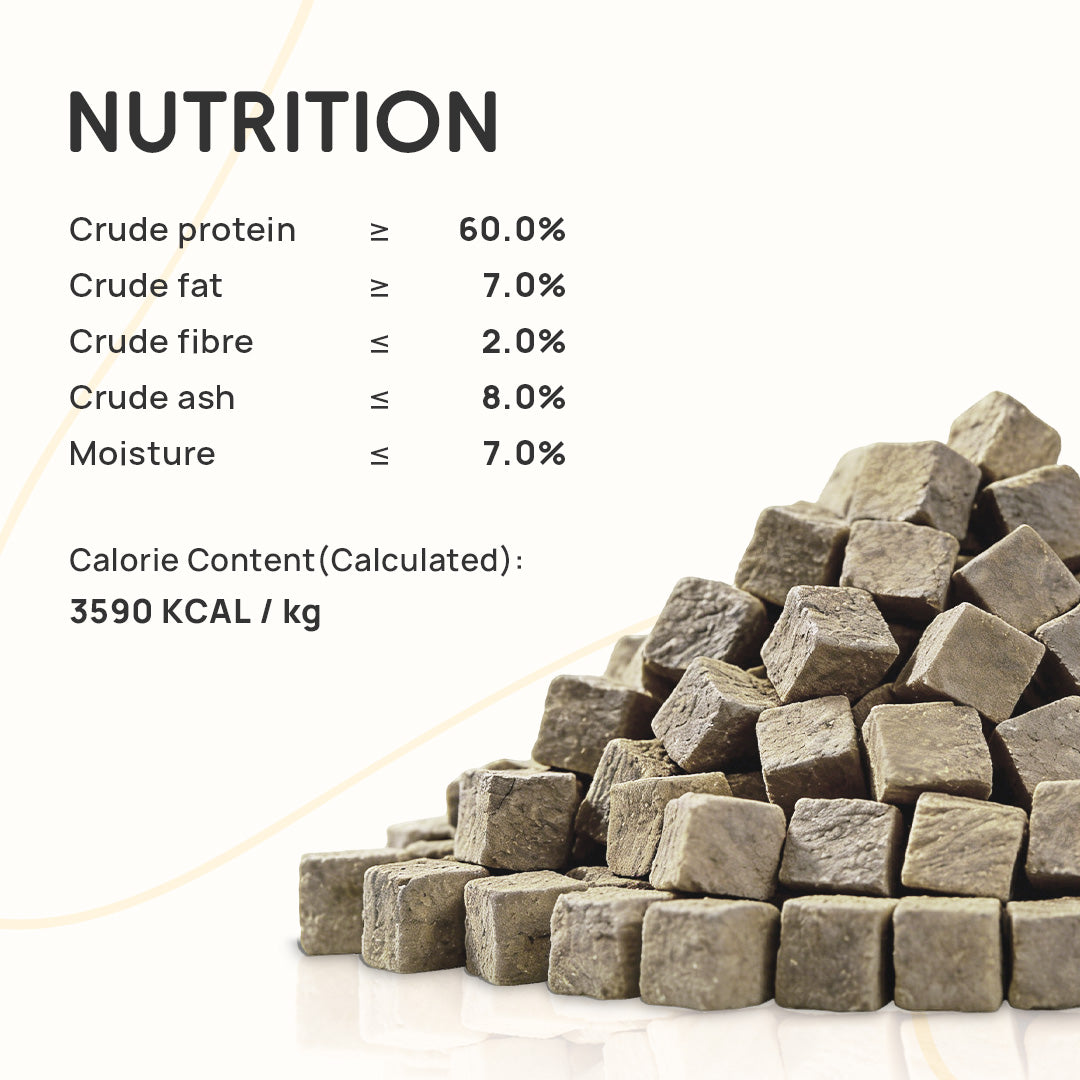
What nutrients are found in Kaiivo Freeze-Dried Pure Beef Liver Bites?
Why simplicity and transparency matter more than ever
Because regulation is centered on safety rather than performance, the responsibility for choosing high-quality treats often falls on the pet owner. This is where ingredient transparency becomes incredibly valuable.
When a label clearly shows what’s inside—and keeps it simple—it’s easier to make informed decisions. Single-ingredient treats reduce the risk of unnecessary additives, and they’re often a better fit for pets with sensitivities or specific dietary needs.
It also builds trust. When you can look at a treat and immediately understand what it is, there’s less guesswork involved. And in a market with so many options, that clarity can go a long way.
The takeaway
Dog treats in the United States are regulated, but they’re regulated as food rather than medicine. That means they must meet safety and labeling standards, but they don’t go through a pre-approval process before being sold.
For pet owners, that creates a simple but important reality:
regulation sets the baseline, but quality depends on the brand.
Choosing treats made with clean ingredients, produced in reputable facilities, and labeled transparently can make all the difference. When those pieces come together, treats become more than just a reward—they become a safe, enjoyable part of your pet’s everyday routine.